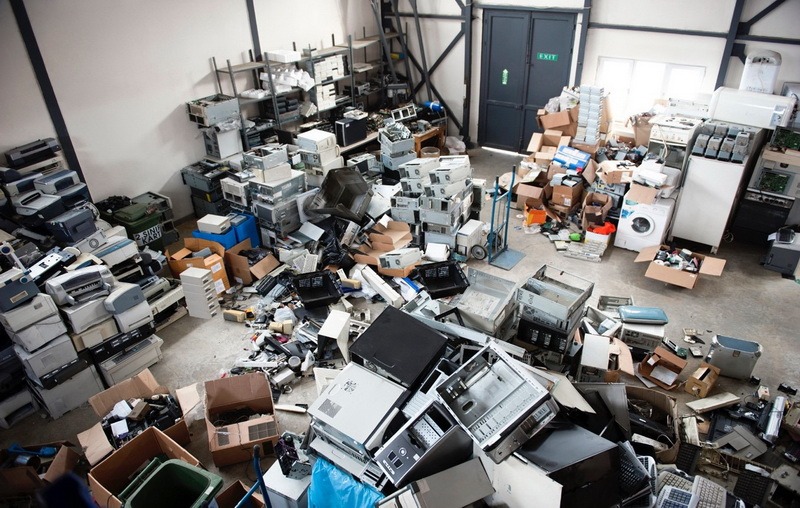
Equipment valuation is a separate area within property valuation and should not be confused either with real estate valuation or with vehicle valuation. In practice, clients often mean very different things by the word “equipment”: from industrial machines and commercial refrigeration units to servers, laptops, office devices, and entire production lines. That is why, before the work begins, it is important to determine correctly what exactly is being valued and for what purpose the result is needed.
Most often, equipment valuation is needed for accounting: putting assets on the balance sheet, recording fixed assets, selling individual units of equipment, disposal through sale, or internal analysis of company assets.
What Is Treated as Equipment
Very different assets may fall under equipment. Most often, this includes machines, production lines, machine tools, compressors, pumps, generators, filling, packing, or other specialized industrial equipment. Commercial equipment is also often valued separately: refrigerated display cases, cashier units, shelving, professional kitchen equipment, scales, and other devices used in a shop, café, or warehouse.
In addition, equipment valuation usually covers office and computer hardware: desktop systems, laptops, monitors, servers, multifunction devices, printers, network hardware, office phones, and other similar assets. Formally, such hardware is also equipment, although the approach to valuing it often differs from the approach used for heavy industrial machinery.
Sometimes related assets are also valued together with equipment — furniture, specialized tables, cabinets, metal shelving, and auxiliary structures — if they function as part of a production, retail, or office process. But it is important not to blur the subject: if the matter concerns cars, special-purpose machinery, or other vehicles, this is already a separate field with its own valuation rules and separate pages on our website.
When Equipment Valuation Is Most Often Needed
The most common practical scenario is equipment valuation for accounting purposes. A company may need to recognize assets on the balance sheet, revalue fixed assets, reflect the fair or market value of assets, or prepare documents for internal or external accounting. In such situations, it is especially important not just to name a figure, but to explain why that value is justified as of a particular date.
Another common reason is putting equipment on the balance sheet. For example, a company may receive assets from a founder, acquire them without a complete accounting document package, take over assets after reorganization, or discover property that is actually in use but has not been properly recorded. In such cases, valuation helps determine the value at which the asset should be correctly recognized in accounting.
Very often, valuation is also needed for disposing of equipment through sale. In practice, companies often have old, worn-out, or partly non-functioning assets that they no longer plan to use. A typical example is the sale of smartphones and laptops to employees who used them, either upon dismissal or during a scheduled upgrade. If equipment is sold, its market value needs to be justified so that both from an accounting perspective and in the event of a tax audit it is clear why exactly that price was used as the basis.
How Valuation of Industrial Equipment Differs from Valuation of Office Hardware
At first glance, a machine tool, a laptop, and a refrigerated display case are all equipment. But in practice, the valuation approach may differ substantially. For industrial equipment, technical parameters, productivity, capacity, year of manufacture, degree of physical wear, completeness, the presence of major units and assemblies, possibility of further use, and whether there is any active resale market for such property usually matter most.
With office and computer hardware, the logic is somewhat different. Technical condition still matters, but model, configuration, market relevance, processor generation, memory capacity, technical obsolescence, and the speed of moral depreciation become additionally important. Put simply, an old lathe may remain operational and commercially attractive for years, while a computer or server becomes obsolete much faster, even when it still physically works.
What Has the Greatest Effect on Equipment Value
For most clients, the most obvious factor is the age and physical condition of the equipment. And that is indeed important. But in practice, the value of property depends not only on whether it works and not only on the year of manufacture. Functional and external obsolescence are often just as decisive, although clients usually know much less about them.
Physical Deterioration
Physical deterioration is the type of wear that people most often imagine first. It means the actual worsening of an asset’s condition as a result of use, time, load, corrosion, wear of components, mechanical damage, or repairs. For example, if a machine tool has been used in production for a long time, has worn guides, backlash, repair traces, and reduced precision, that is a classic case of physical deterioration. The same applies to a forklift, refrigeration equipment, or an office printer: an asset that has been used intensively for a long time cannot be worth the same as a new one.
Functional Obsolescence
Functional obsolescence is less obvious, but no less important. It arises when equipment can still operate, but no longer meets modern requirements in terms of performance, productivity, energy efficiency, or convenience of use. For example, an old production line may still be physically operational, but work more slowly, consume more electricity, and require more manual labor than modern equivalents. Or an old computer may still switch on and work, but because of weak specifications it is no longer suitable for real office tasks. In such cases, the equipment loses part of its value not because it is “broken,” but because it has become functionally outdated.
External Obsolescence
External obsolescence is connected not with the equipment itself, but with what is happening around it. This may include market changes, a drop in demand for a certain type of machinery, the disappearance of an entire industry niche, problems with service and spare parts, or the appearance of restrictions that reduce the attractiveness of the equipment. For example, fully operational machinery for a highly specialized type of production may be worth much less simply because that market has effectively declined and there are almost no buyers left. Or a foreign-brand device may lose part of its market value due to problems with the supply of spare parts or service support in Ukraine.
It is precisely the combination of these three types of depreciation that often explains why the real market value of equipment turns out to be lower than the owner expects. A person may think, “it still works,” while the market looks more broadly: how modern, liquid, convenient, and attractive the asset is to a potential buyer right now.
What Is Usually Needed to Start the Work
In most cases, equipment valuation does not require an overly complicated document package. For most types of assets, a simple list of equipment for valuation is enough, where each item includes the main characteristics: name, make or model, year of manufacture, technical condition, completeness, quantity, and other basic information that allows the asset to be identified.
If the equipment is simple and typical, this is often enough to begin the work. But if the matter concerns more complex objects — production lines, specialized machines, power equipment, narrow-profile installations, or expensive technological systems — then it is desirable to have technical documentation as well. This may include passports, specifications, productivity and capacity data, parameters, completeness, modernization details, serial numbers, and other information that helps clarify exactly what is being valued.
Summary
Equipment valuation is most often needed for accounting, balance sheet recognition, revaluation of fixed assets, or disposal of property through sale. In such situations, it is important to have a justified result that can be used in practical work, including in the course of tax inspections.
At the same time, valuation of industrial equipment, commercial assets, office hardware, and computer equipment can all be handled within one service, provided it is understood that the approach to different groups of property will differ. Value is influenced not only by physical condition, but also by functional and external obsolescence. In most cases, a properly prepared equipment list with the main characteristics of each item is enough to begin the work.