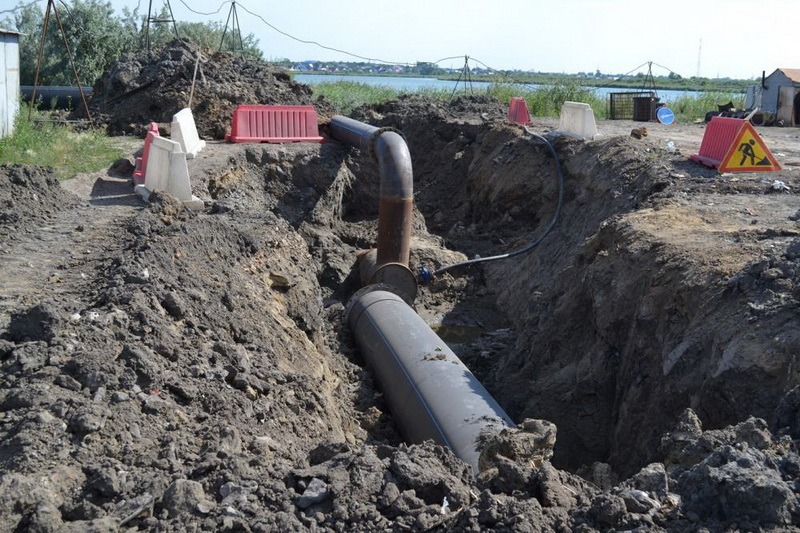
In practice, this type of work differs from the valuation of an apartment, a house, or even a separate non-residential building. Here we are dealing not simply with real estate, but with complex engineering assets that have technical parameters, length, materials, diameter, cross-section, capacity, degree of depreciation, connection nodes, related structures, and equipment. That is why the choice of valuer is especially important in such cases: it requires not only general valuation experience, but also an understanding of cost estimates, specialized regulatory reference materials, and the technical logic of how these networks function.
If you need a general explanation of the topic, you can also look at the article real estate appraisal. And when, within one project, you need to value not only the networks themselves but also individual pumps, boilers, transformers, control cabinets, or other equipment, it is useful to also look at the page equipment appraisal.
Why the valuation of networks and utility infrastructure has its own specifics
Engineering networks rarely exist as a “market product” in the same way that an apartment or office is sold. A water supply system, sewage system, heating network, outdoor lighting system, or transformer substation usually has value not on its own, but as part of the infrastructure of a residential complex, enterprise, cottage community, gardening association, or the territory of a populated area.
That is why, in such assignments, the focus is not on market listings but on technical and accounting information, the correct identification of the asset composition, the commissioning date, the degree of depreciation, cost-estimate indicators, and the cost of reproduction or replacement. In the specialized Methodology for Valuation of Assets of Natural Monopoly Entities, it is no coincidence that “buildings and structures,” “transmission devices,” the year of commissioning, and the value “based on revaluation carried out through independent appraisal” are singled out separately. This clearly shows that for networks, what matters is not general wording, but the correct classification of the asset and accurate source data.
For some energy-sector assets, the Methodology also contains aggregated indicators of “replacement cost,” in particular for substations, cable and overhead lines, as well as for buildings with gas regulating equipment. In other words, this is not an abstract document “for form’s sake,” but a real tool used in specialized work with network assets.
If you are interested in the broader regulatory framework, it is also worth looking at the articles Property Valuation Law: Key Rules for the Client and National Standard No. 1: What a Valuation Client Should Know.
In which cases is this type of valuation ordered most often
In practice, there are two most typical scenarios.
The first is the transfer of networks into municipal ownership or onto the balance sheet of the relevant enterprise or territorial community. This often concerns newly built residential complexes, private developments, cooperatives, businesses, or facilities where the networks already physically exist and function, but still need to be properly formalized from a legal and accounting standpoint. In such cases, the client is usually interested not in just “some figure,” but in a report that can actually be used for documentation purposes.
The second is for accounting and financial reporting purposes. This may involve the revaluation of fixed assets, updating balance sheet values, reflecting asset value in reporting, preparing for an audit, internal corporate procedures, or bringing order to the accounting of infrastructure assets that have long been on the balance sheet and no longer reflect reality either in terms of technical condition or value indicators.
For exactly these tasks, it is especially important that the valuer be able to work not only with title documents, but also with inventory cards, cost estimates, schemes, completion certificates, data on reconstruction, modernization, major repairs, and technical condition.
Water supply valuation

The valuation of a water supply system usually concerns cold water supply networks. At first glance, it may seem that everything is simple here: there is a pipe length, and that should be enough. In reality, this is one of the most typical mistakes. To determine value correctly, it is important to consider the pipe material, diameter, year of installation, laying method, the presence of wells, shut-off valves, chambers, tie-in nodes, pumping equipment, as well as information about reconstruction and replacement of individual sections.
When a water supply system is being transferred onto the balance sheet of a community or a specialized municipal enterprise, it is important to clearly define the boundaries of the asset: where exactly the network begins and ends, what is included in its composition, and what already belongs to another owner or another engineering system. If this is not clarified from the start, typical problems begin later: one department provides one length, another provides a different one, and accounting may show a third figure altogether.
It is also worth remembering that a water supply system is often closely linked to sewage, but for valuation purposes these are not the same thing. If the property also includes pumps, control systems, automation cabinets, or other technological equipment, part of the assets may need to be valued separately as equipment.
Sewage system valuation
Sewage networks also cannot be valued simply “by pipe length.” Here, the material, diameter, depth of installation, number of wells, presence of receiving chambers, pumping stations, outlets, connections, as well as the actual technical condition and accessibility for repair are all very important.
The peculiarity of sewage systems is that the network may look relatively normal from the outside, while the actual level of wear may be substantial. For the valuer, information about аварийность, replacement of individual sections, subsidence, corrosion damage, slope problems, silting, or discrepancies between part of the network and the original design is essential. If the network is being transferred onto a balance sheet, then without a proper description of its composition and condition, questions from the receiving party are almost inevitable.
In many cases, sewage networks form part of one infrastructure complex together with the water supply system, but the valuation must still treat them as a separate asset with their own parameters and their own depreciation.
Heating network valuation: heating and hot water supply
Heating networks are one of the clearest examples where, without specialized experience, a valuer can easily make a mistake. Such networks often include not only heating pipelines, but also hot water supply lines, heating chambers, compensators, shut-off valves, insulation, channels, supports, connection nodes, and other elements that are easy either to miss or, on the contrary, to count twice without proper technical understanding.
For the valuation of heating networks, the laying method, pipe diameter, insulation type, material, year of construction, presence of replaced sections, heat losses, and the actual condition of chambers and valves are especially important. Hot water supply and heating often appear within one project, but when describing the asset, it is necessary to look very carefully at how exactly they are recorded by the client — together or separately.
Heating networks are very often valued for transfer into municipal ownership or for proper reflection of assets in reporting. General real estate experience is not enough here. One needs to understand the logic of engineering systems, the cost-estimate side of the work, and how to correctly account for reconstruction, major repairs, and replacement of individual network sections.
Gas pipeline valuation
With gas pipelines, the standards for accuracy are even higher. These assets are sensitive both from the standpoint of safety and from the standpoint of technical documentation. For valuation, what matters is not only the length, diameter, and material, but also the pressure, type of installation, composition of nodes, the presence of gas regulating stations, cabinet-type or other regulating units, shut-off valves, casings, crossings, and related structures.
In the case of gas networks, clients often assume that an old commissioning certificate and a balance sheet statement are enough. In practice, this is usually insufficient. The valuer needs to see not only the accounting side, but also the technical composition of the asset, because this determines what exactly is included in the valuation: only the pipes, or also gas regulating points, buildings, fences, metering units, valves, and other elements.
If the work is being carried out for the transfer of gas pipelines onto a balance sheet, then a description of the asset composition and confirmation of technical characteristics are almost as important as the value calculation itself.
Valuation of the street lighting system
The street lighting system is often underestimated as a valuation object. From the outside, it may seem simpler than a heating network or gas pipeline, but in reality it consists of many elements: cable or overhead lines, poles, brackets, luminaires, control cabinets, breakers, connection nodes, meters, and sometimes separate transformer solutions or a connection to an existing network.
For the valuer, it is important not to combine everything into one faceless “lighting package.” In accounting, poles may be recorded separately, cable separately, and luminaires separately. Or, on the contrary, everything may be carried as one inventory asset. Without understanding the technical scheme and without careful work with the documents, it is easy either to lose part of the value or to include in the valuation something that should not be there.
The street lighting system is especially important in cases of transfer onto the balance sheet of a community or municipal enterprise. There, what matters is not only the total figure, but also the proper identification of all system components.
Valuation of electrical networks and transformer substations
Electrical networks and transformer substations are one of the most difficult topics in this field. It is precisely here that it becomes most obvious how important it is for the valuer to have specific experience with network assets, understand the technical characteristics of the property, and know how to use specialized reference sources and cost-estimate indicators.
For power transmission lines, the key factors include the voltage class, type of line, cable or conductor type, cross-section, number of circuits, installation method, length, regional conditions along the route, density of development, presence of poles, joints, switching elements, and other components. For transformer substations, the important factors are the substation type, voltage, transformer capacity, composition of switchgear, structural part, automation, protection, relay equipment, communications, and telemechanics.
This is where the practical value of the Methodology is especially visible. For some of these assets, it directly provides aggregated indicators for substations, substation units, cable and overhead lines, as well as separate indicators for assets related to gas regulating equipment. But even when such materials are available, valuation does not come down to mechanically plugging numbers into a formula. First, the asset must be classified correctly, the asset composition must be identified, and the technical parameters must be checked — only then can one move on to calculations.
It is precisely with electrical networks and transformer substations that the difference between a formal and a high-quality report is most apparent. A formal report gives a number. A good report shows that the valuer actually understood what they were dealing with: a cable line, an overhead line, a package transformer substation, a substation building, separate power equipment, or an infrastructure complex consisting of several components.
What documents and source data are usually needed
For the valuation of networks and utility infrastructure, a broader package of information is almost always required than the client initially expects. In a typical case, inventory cards, a balance sheet statement, the year of commissioning, original and residual value, information on major repairs, reconstruction, and modernization, technical characteristics, schemes, drawings, boundary demarcation acts, as-built documentation, inspection reports, photo documentation, and data on the asset composition will be needed.
For pipeline networks, the key factors are length, diameter, material, installation type, and related nodes. For electrical networks, voltage, cable or conductor type and cross-section, line type, number of circuits, presence of poles, and switching equipment are essential. For substations, transformer capacity, voltage, equipment composition, and the structural part matter.
The better the source data at the start, the smoother the work proceeds. But the main thing is not even the number of documents, but that the information be consistent between the technical service, accounting department, and the client. For network assets, it is precisely inconsistency of data that most often becomes the reason why valuation takes longer than expected.
Why the choice of valuer is especially important here
The valuation of utility infrastructure is not a case where general “real estate valuation” experience is enough. It requires separate practical experience. The valuer must understand how to read inventory cards and cost-estimate documents, how to work with regulatory and reference sources, how to separate structures, transmission devices, and equipment, and how to account for reconstruction, partial replacement of network elements, and actual technical condition.
No less important is a basic technical understanding. A person valuing a heating network, water supply system, gas pipeline, or substation should at least at a working level understand how these systems function, what elements they consist of, and which characteristics actually affect value. Without this, the report risks looking formally correct while being weak in substance.
Put simply, for this kind of work, what matters is not only the presence of a certificate, but real experience specifically with networks. And clients usually feel the difference very quickly between a valuer who has already worked with similar properties and a specialist who approached utility infrastructure in the same way as a typical building or apartment.
Conclusion
In this type of work, what matters most is not polished general wording, but the precise identification of the asset composition, work with accounting and technical data, the correct application of the methodological framework, and the valuer’s practical experience specifically in the field of network assets. The more complex the asset, the more important it is that the valuer be able to combine the valuation, cost-estimate, and technical parts into one logical and understandable report.
If you need narrower examples specifically related to networks, it makes sense to look separately at materials on water supply, sewage, heating networks, gas pipelines, transformer substations, and power transmission lines.
Frequently asked questions
Can networks be valued based only on a balance sheet statement?
Sometimes a balance sheet statement helps to get started, but for a proper valuation it is almost always insufficient. Technical characteristics, asset composition, year of commissioning, information on reconstruction, schemes, photos, and other source data are needed.
Why is the cost approach often more important for such assets than looking for comparable sales?
Because a water supply system, heating network, transformer substation, or street lighting system is rarely sold on the open market as a typical and directly comparable product. As a result, the key role is played by the analysis of reproduction or replacement cost, taking into account depreciation and technical condition.
Is equipment automatically included in the valuation of networks?
Not always. Everything depends on the composition of the asset and on how exactly the assets are recorded by the client. Part of the property may belong to structures and transmission devices, while another part may belong to machinery and equipment, which in some cases should be separated out.
What most often makes the valuation of utility infrastructure more difficult?
Poorly defined asset boundaries, discrepancies between accounting data and technical service data, lack of information about reconstruction, and situations where networks, structures, and equipment are mixed together in one list without a proper description.